Organising Materials Visually: Trays, Shelves, and the Art of Accessible Storage
Visible organisation supports use
Tools that can be seen are more likely to be used. Visual organisation focuses on accessibility: trays, open shelving, and shallow containers that show rather than hide materials. This reduces friction and encourages spontaneous exploration.
Group by activity
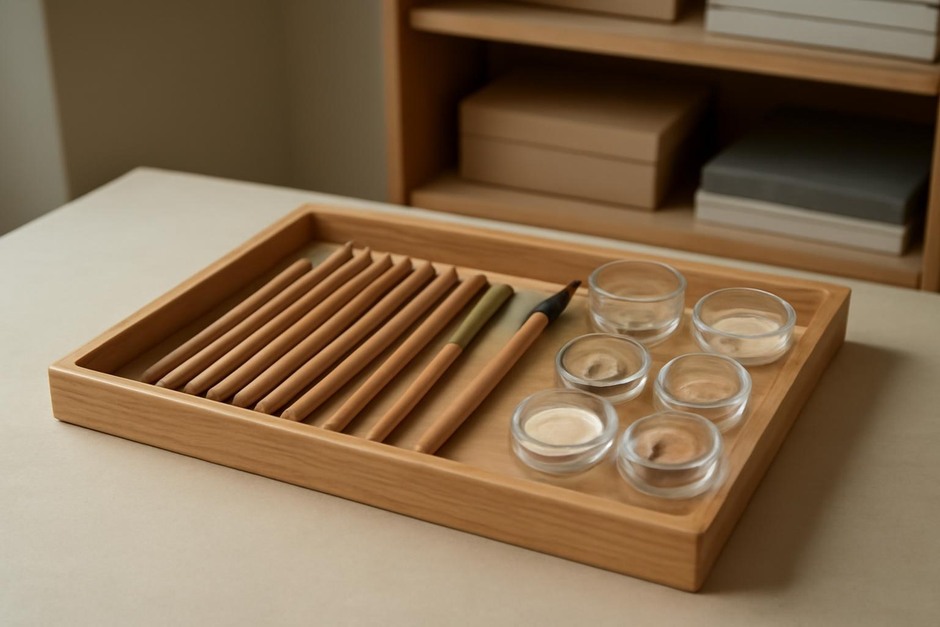
Arrange materials according to the activities you perform. Keep a drawing tray for pencils, erasers, sharpeners, and blending tools. Have a painting tray for brushes, mixing knives, and small jars. When tools are grouped by task, starting a session is a matter of reaching to the right tray rather than rummaging through a mixed drawer.
Tray systems for quick resets
Shallow trays are useful for both portability and containment. Use one tray as a working set and another as storage. At the end of a session, returning items to their tray becomes a five-minute reset ritual. This habit maintains visual order and makes it easy to resume work the next day.
Open shelving with rhythm
Open shelves should balance visibility and restraint. Alternate boxes or baskets with open displays of materials to reduce clutter. Reserve one shelf for live projects—sketchbooks in progress, reference stacks, or palettes—so you always have an immediate focal point for what you’re currently exploring.
Containers that reveal content
Clear or partially open containers show contents while protecting them. Use small jars for pencils and brushes, shallow boxes for pastels, and labelled tins for small items like clips or nibs. Labels are practical, but consistent placement and grouping often make items recognizable without reading the label.
Work surfaces and vertical space
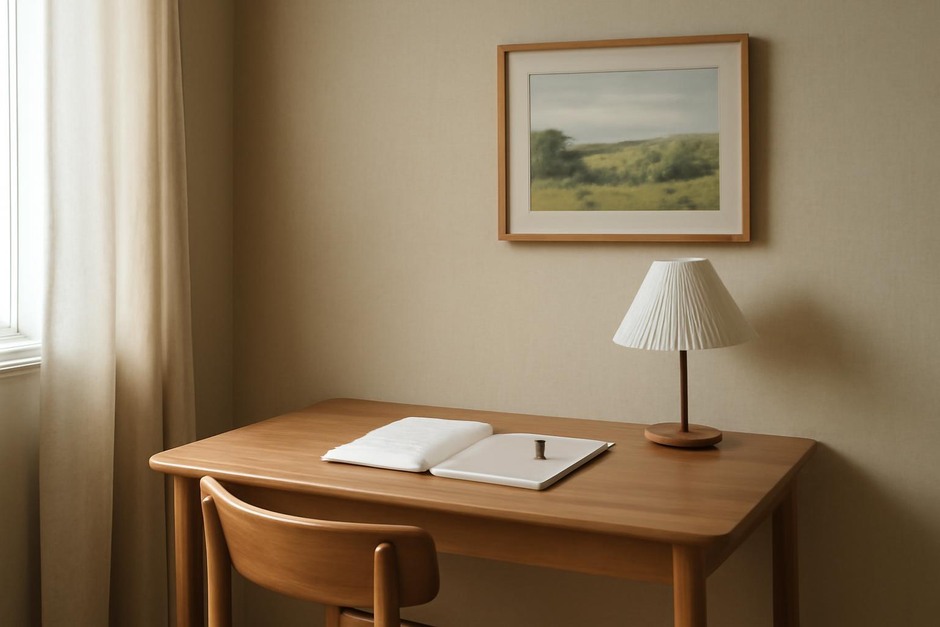
Keep the main work surface as clear as possible. Use vertical space for frequently referenced items: pegboards, magnetic strips, or a narrow shelf above the desk. Vertical organisation keeps tools visible and leaves the horizontal surface free for composition and mark-making.
Aesthetic cohesion for calm focus
Choose a modest visual language for storage: similar containers, neutral colours, or a repeated material like wood or metal. Cohesion reduces visual noise and keeps the studio inviting. The goal is calm visibility—materials are present and attractive without competing with your work for attention.
Ritualise weekly checks
Once a week, do a quick inventory: sharpen pencils, refill water jars, replace spare blades. This short maintenance prevents small interruptions during focused sessions and keeps your visual systems functional. These rituals are not chores but investments in the conditions that make sustained attention easier.
Organising materials visually is about designing motion: how you reach, move, and return things. Trays, shelves, and thoughtful containers create a rhythm that keeps tools within sight and within habit, fostering a studio environment where work starts smoothly and continues naturally.